Indonesia Reaffirms Commitment to Nuclear Power Plant Resilience Against Climate Change at the IAEA Forum in Vienna
Kembali 24 Oktober 2025 | Berita BAPETEN | 1676 lihat
Extreme weather and climate change have become real challenges for the resilience and safety of nuclear power plants (NPPs) worldwide. Over the past two decades, several NPPs in Europe and the United States have been forced to temporarily halt operations due to heatwaves, floods, or biological phenomena such as jellyfish blooms clogging cooling systems.
Recognizing this issue, the International Atomic Energy Agency (IAEA) organized the International Conference on Nuclear Installation Resilience to External Events from a Safety Perspective with a Focus on Climate Change (NIRC-2025), held from 20–24 October 2025 at the IAEA Headquarters in Vienna, Austria. The conference was attended by 270 participants from 47 countries, with more than 100 participants joining online. The conference president was Mr. Petteri Tiippana, Head of the Finnish Radiation and Nuclear Safety Authority (STUK).
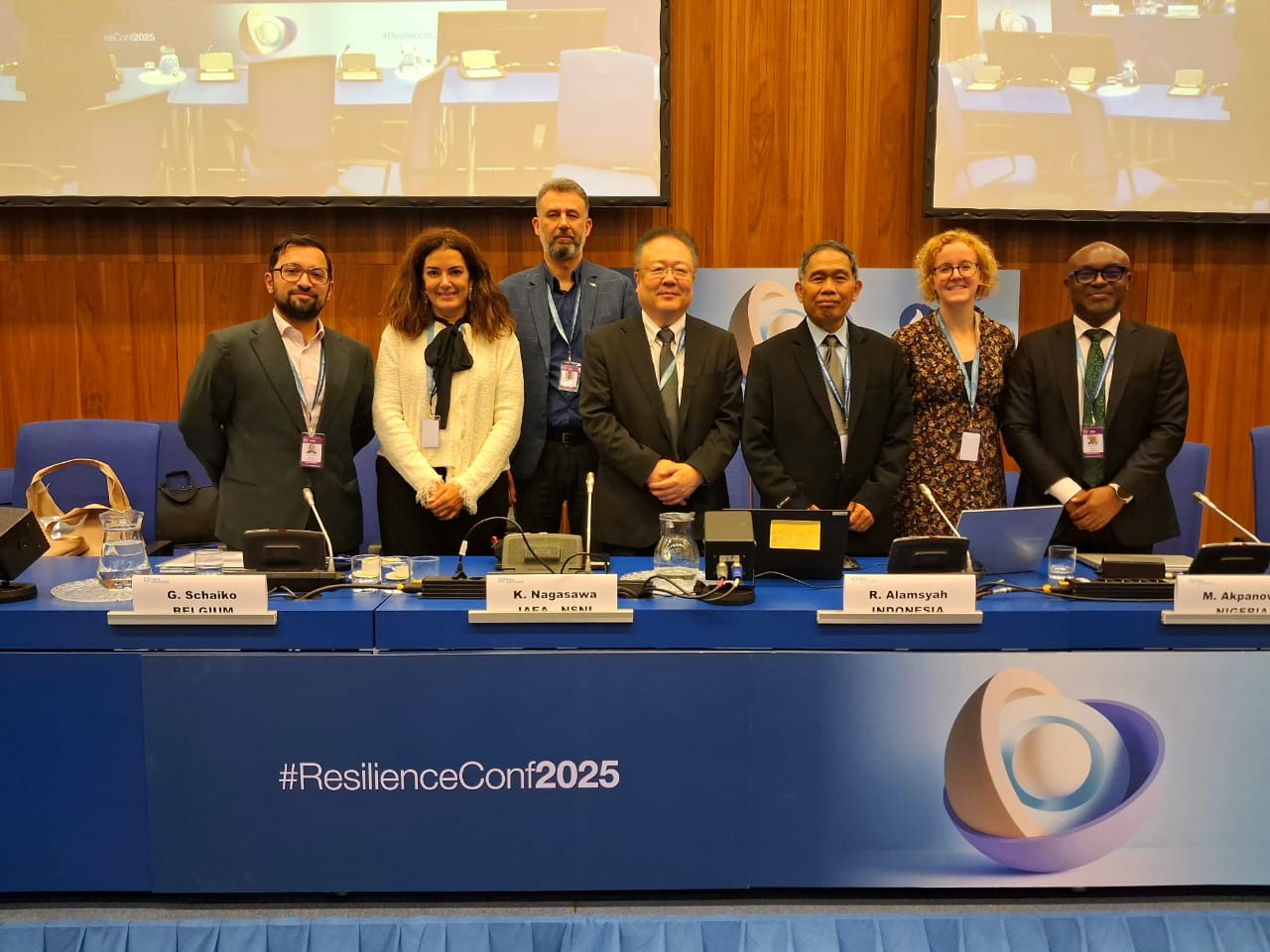
Indonesia actively participated in this prestigious forum. Reno Alamsyah, Principal Radiation Inspector of the Nuclear Energy Regulatory Agency (BAPETEN), served as a member of the Conference Scientific Committee, as well as an invited speaker and moderator for one of the main sessions.
In his presentation titled “Addressing the Resilience Issues of NPPs to Climate Change Through the CNS and VDNS: The Perspective of Indonesia as an Embarking Country”, Reno Alamsyah emphasized that climate change poses new challenges to the safety of nuclear power plants, including heatwaves, droughts, sea level rise, forest fire risks, and changes in marine ecosystems that may affect reactor cooling systems.
He noted that two key international instruments the Convention on Nuclear Safety (CNS) and the Vienna Declaration on Nuclear Safety (VDNS) provide a relevant framework for strengthening NPP resilience against climate threats.
"Climate change is no longer merely an environmental issue, but a safety factor. Therefore, every country, including Indonesia, must ensure that the design and oversight of nuclear power plants take extreme climate impacts into account from the planning stage."
"CNS and VDNS provide a strong foundation for building adaptive NPP resilience. For Indonesia, as a country preparing its first nuclear power plant, active participation in international forums such as NIRC-2025 is crucial to ensure that our regulatory system aligns with global best practices."
"Resilience of nuclear power plants to climate change is not optional it is a necessity for the future of safe and sustainable nuclear energy," Reno Alamsyah concluded his presentation.
Representing the National Research and Innovation Agency (BRIN), young researchers Titik Sundari, Khusnul Khotimah, and Putra Oktavianto also presented their research findings orally. The active participation of these Indonesian delegates demonstrates Indonesia’s tangible commitment to strengthening the resilience of nuclear installations against the impacts of climate change.
For embarking countries like Indonesia, which is preparing to build its first nuclear power plant, it is expected that climate risks will be integrated into safety analysis reports and Environmental Impact Assessments (AMDAL), while leveraging the review mechanisms of the CNS and VDNS to strengthen the national regulatory system.
A transparent and science-based approach to building NPP resilience against climate change is believed to enhance public and investor confidence in the national nuclear program. Furthermore, international cooperation, capacity building for human resources, and the use of climate data from BMKG are essential elements to support sustainable NPP resilience.
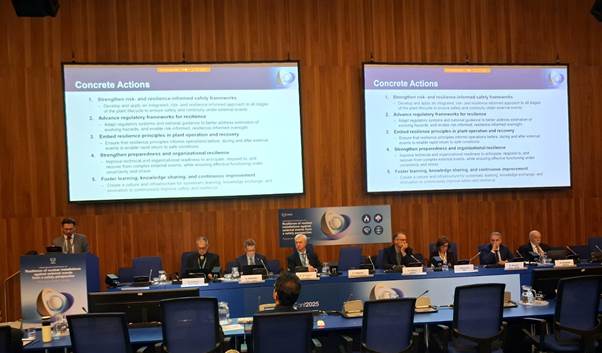
At the conference closing, Mr. Petteri Tiippana, President of NIRC-2025, presented a global action plan to strengthen the climate resilience of nuclear installations. Indonesia welcomed this initiative and reaffirmed its commitment to continue actively participating in international forums aimed at ensuring the safety and sustainability of nuclear energy. [BHKK/SP]









Komentar (0)